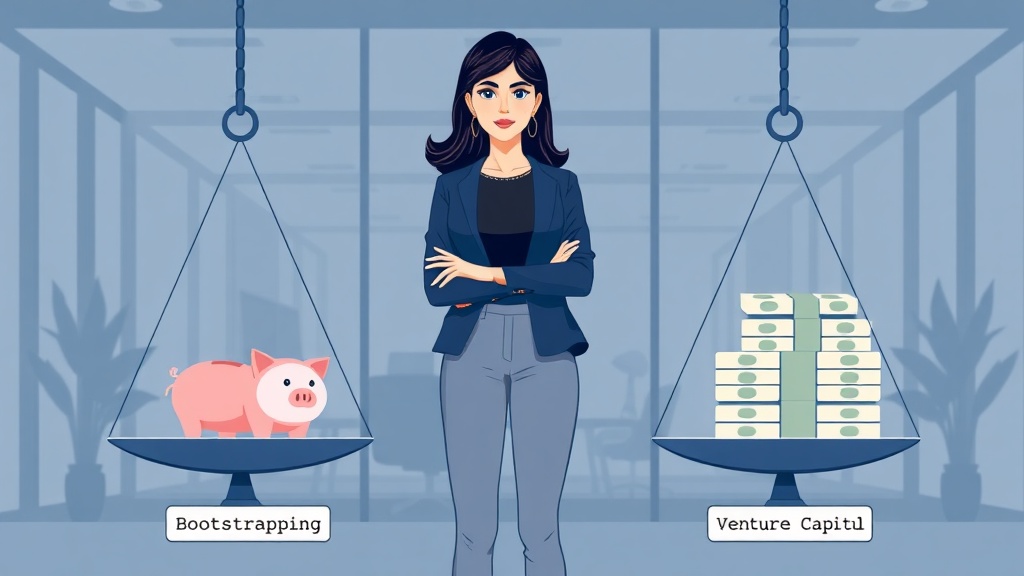
Bootstrapping vs Venture Capital: Which Path Pays Off More for Female Founders?

Can a bootstrapped startup out‑perform a VC‑backed rival? For many female founders, the answer isn’t as simple as “yes” or “no.” Recent data shows bootstrapped women‑led companies enjoy a 60% success rate versus a 35% rate for their VC‑funded peers—a gap that flips the conventional wisdom about external capital.
In this comparison, I break down the hard numbers, the hidden costs, and the strategic moments when each route makes sense. If you’re weighing whether to tap investors or double‑down on self‑funding, this guide will give you the ROI‑focused framework you need.
What does the data actually say about bootstrapping vs VC funding for women founders?
Multiple 2025 reports converge on a striking pattern:
- Bootstrapped female‑founder ventures report a 60% success rate (defined as sustainable revenue >$1M or profitable exit) — Startup Genome 2025 Ecosystem Report.
- VC‑funded women‑led startups show a 35% success rate under the same definition — Founders Forum Group 2025 study.
- When women‑led firms do raise VC, they tend to generate 63% higher returns than all‑male teams, but the equity dilution can be severe — Embroker analysis.
These numbers tell a story: bootstrapping keeps more equity and often leads to profitability, while VC can accelerate growth but at the cost of ownership.
How does each path affect equity and control?
Bootstrapping: You retain 100% of the cap table until you issue shares for employees or advisors. That means you can negotiate salaries, equity grants, and strategic pivots without needing investor sign‑off. The trade‑off is slower capital infusion, which can limit hiring speed and market expansion.
Venture Capital: A typical Series A round for a female‑founder SaaS startup in 2026 averages $7 M for a 20‑30% equity stake (TechCrunch 2025). That leaves you with a smaller slice of future upside, and investor consent rights often dictate board composition and exit timing — a theme explored in The Governance Trap.
When does bootstrapping make strategic sense?
- Low‑capital business models — SaaS with low CAC, niche B2B services, or marketplaces that can scale with revenue.
- Founder‑controlled growth — When you want to iterate quickly without board approvals.
- Risk‑averse investors — If you anticipate a long sales cycle or regulatory hurdles that make VC less eager.
In these scenarios, the cap‑table metrics stay simple, and you avoid the dilution blindspot described in The Dilution Blindspot.
When is raising VC the smarter move?
- Capital‑intensive growth — Building a logistics platform, manufacturing hardware, or a data‑heavy AI product that requires upfront spend.
- Network leverage — Access to strategic partners, customers, and talent that come with a reputable VC.
- Speed to market — When a first‑mover advantage is essential and waiting for organic cash flow would cede the market.
Even then, you should negotiate protective provisions: anti‑dilution clauses, board observer rights, and clear exit horizons. Those clauses are the focus of The Governance Trap and The IWD Trap.
What are the hidden costs of each route?
Bootstrapping hidden costs: Founder burnout, slower hiring, and missed market timing. Many founders report spending 80+ hours a week on finance and operations instead of product development.
VC hidden costs: Legal fees, diligence expenses, and the “valuation ceiling” that can cap upside after a down round. The Liquidation Preference Stack illustrates how a seemingly generous term sheet can erode founder payouts.
How can you decide which path to take?
Use this three‑step decision matrix:
- Assess capital needs: Project cash burn for the next 12 months. If you need >$5 M to hit product‑market fit, VC may be justified.
- Calculate equity cost: Model dilution scenarios using the cap‑table metrics spreadsheet.
- Measure strategic value: Assign a dollar value to the network, mentorship, and brand boost a VC brings. If that value exceeds the equity you’d give up, the trade‑off is worth it.
When the numbers line up, you’ll have a data‑driven justification for the board, investors, or your own confidence.
Takeaway: Choose the path that preserves the ROI you care about most
Bootstrapping gives you control and a higher probability of sustainable success; VC can catapult you to scale but dilutes ownership and adds governance friction. Run the three‑step matrix, check the metrics, and decide which upside you’re betting on.
Related Reading
- The 5 Essential Cap‑Table Metrics Every Female Founder Should Track Quarterly — Keep your equity math clean.
- The Dilution Blindspot: What VC Terms Are Actually Doing to Your Wealth — Understand how financing terms bite.
- The Governance Trap — Guard against investor‑driven exit constraints.
- The IWD Trap — Why a clean cap table is real empowerment.